Prostate-related urinary problems are common among ageing men. Difficulty in starting urination, reduced urinary flow, increased frequency of urination, repeated nighttime urination, incomplete bladder emptying, and dribbling after urination can significantly affect a man's comfort, sleep, and overall quality of life.
In modern medicine, enlargement of the prostate gland is commonly described as Benign Prostatic Hyperplasia (BPH). Ayurveda approaches such urinary disorders through its own classical framework, particularly through the concepts of Mutraghata, Vatashteela, Mutravaha Srotas, and Apana Vata.
The Ayurvedic classics contain detailed descriptions of disorders involving obstruction and altered passage of urine. Among these, Vatashteela, described under Mutraghata by Acharya Sushruta, has been extensively discussed in Ayurvedic literature in relation to the clinical features of prostate enlargement.
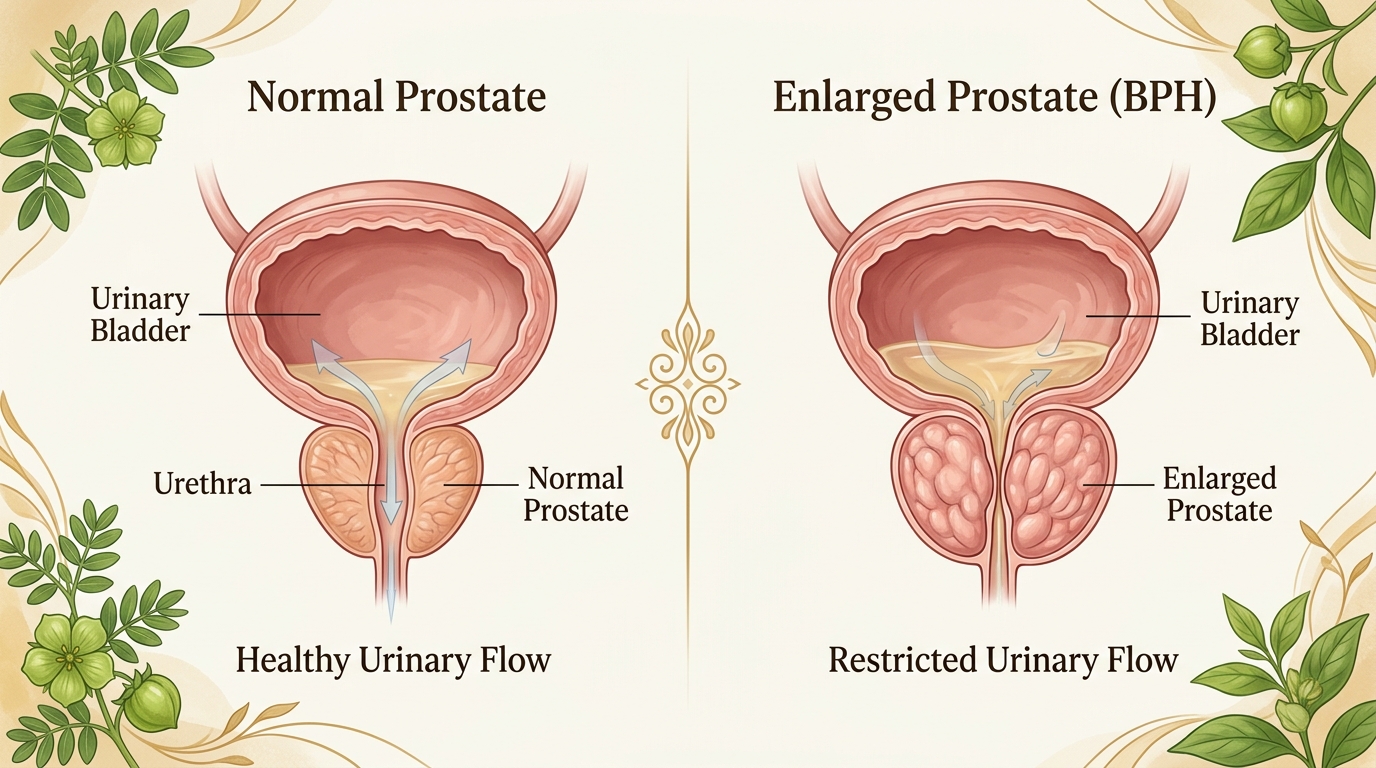
What Is Prostate Enlargement?
The prostate is a gland situated below the urinary bladder and surrounding the initial portion of the urethra. As men age, the prostate may gradually enlarge. When enlargement affects the normal passage of urine, various lower urinary tract symptoms (LUTS) may develop.
Clinical Video: Understanding Prostate Enlargement
Watch Dr. Sumedha Katte explain the signs, causes, and clinical approach to prostate health:
Common symptoms include:
- Difficulty initiating urination (hesitancy)
- Weak or reduced urinary stream
- Intermittent urine flow
- Increased frequency of urination
- Urgency to urinate
- Frequent nighttime urination (nocturia)
- Prolonged time required to pass urine
- Feeling of incomplete bladder emptying
- Straining during urination
- Dribbling after urination
The intensity and combination of symptoms vary from person to person.
Clinical Video: Classical Ayurvedic Perspective
Insights on Apana Vata, Mutraghata, and restoring natural urinary comfort:
Prostate Problems Through the Classical Ayurvedic Perspective
Ayurveda does not describe prostate enlargement using the modern anatomical term "BPH". Instead, urinary obstruction and related disorders are described under distinct clinical entities. Among them, Mutraghata is particularly important.
Acharya Sushruta describes twelve types of Mutraghata in Uttara Tantra, Chapter 58. Vatashteela is one of these twelve conditions. The classical description includes a firm mass-like condition in the region between the urinary bladder and rectum, associated with obstruction of urine and other downward-moving bodily functions.
"Acharya Sushruta describes Vatashteela in Uttara Tantra as a condition arising between the bladder and rectum in which aggravated Vata produces a firm, immobile mass-like formation, obstructing urination, flatus, and bowel evacuation."
This classical description has led several Ayurvedic scholars and researchers to correlate Vatashteela with the clinical presentation of BPH, particularly when symptoms of bladder outlet obstruction are present. Thus, in contemporary Ayurvedic practice, prostate-related urinary symptoms are often understood in relation to Mutraghata / Vatashteela, while the individual patient's clinical presentation determines the definitive diagnosis and treatment approach.
Understanding Vatashteela
Sushruta describes Vatashteela as a condition arising in the region between the bladder and rectum in which aggravated Vata produces a firm, immobile mass-like formation. The classical description associates this with:
- Obstruction to urination
- Difficulty in passing urine
- Difficulty in passing stool
- Retention or obstruction of flatus
- Abdominal distension
- Bladder discomfort
The description is particularly interesting from the perspective of modern prostate disorders because the prostate lies anatomically close to the bladder outlet and urethra. Modern Ayurvedic literature therefore frequently discusses Vatashteela as an Ayurvedic clinical correlate of BPH.
Role of Apana Vata
One of the most crucial concepts in understanding Mutraghata is Apana Vata. Apana Vata governs the downward movement and elimination of urine, stool, semen, and other bodily wastes.
When Vata becomes aggravated and its normal downward flow is obstructed (Vimargagamana / Pratiloma), disorders involving the urinary and pelvic region develop. While classical Ayurvedic discussions of Mutraghata emphasize Vata involvement, contemporary Ayurvedic interpretations also consider the role of Kapha, inflammatory obstruction, swelling, and structural changes in the Mutravaha Srotas depending on the presentation.
Therefore, treatment is not directed merely at the prostate as an isolated organ. The Ayurvedic physician systematically considers:
before determining the personalized treatment protocol.
Causes and Contributing Factors from the Ayurvedic Perspective
Ayurveda places considerable importance on Nidana Parivarjana—identifying and avoiding factors that contribute to disease pathogenesis. Classical and contemporary Ayurvedic literature discussing Mutraghata highlights causative factors such as:
- Suppression of natural urinary urges (Vega Dharana): Habitually delaying the urge to urinate is a key factor aggravating Apana Vata.
- Vata-provoking diet and lifestyle: Excessive dry, cold, light foods, irregular sleep schedules, and excessive physical exhaustion.
- Improper dietary habits: Irregular meal timing, poor hydration, or heavy, dry foods leading to constipation.
- Indigestion and irregular eating: Leading to metabolic sluggishness (Agnimandya) and toxic accumulation (Ama).
- Excessive or unsuitable physical exertion: Prolonged riding, sedentary sitting, or strenuous inappropriate exercise.
- Age-related Vata predominance (Vardhakya): Natural elevation of Vata Dosha in advancing age.
- Disturbance of Apana Vata: Disruption in the pelvic nervous pathways and excretory dynamics.
From an Ayurvedic perspective, therefore, management includes not only herbal medicines but also deliberate correction of diet, lifestyle, bowel habits, and urinary patterns.
Ayurvedic Treatment Principles for Mutraghata and Vatashteela
The management of prostate-related urinary symptoms in Ayurveda is fundamentally individualized. The classical treatment principles described for Mutraghata include:
- Nidana Parivarjana: Identifying and avoiding causative and aggravating diet and lifestyle factors.
- Vata Anulomana: Restoring the normal downward physiological movement of Apana Vata.
- Shamana Chikitsa: Selecting appropriate internal herbal medicines tailored to the patient's Dosha state, symptoms, digestive capacity, and physical vitality.
- Mutrala Dravyas: Utilizing traditional Ayurvedic herbs that promote healthy, unrestricted urinary flow.
- Shothahara Approach: Incorporating anti-inflammatory and swelling-reducing herbal agents where tissue congestion is present.
- Basti Chikitsa: Medicated enema therapies, which hold a premier position in managing Vata disorders in the lower pelvic and abdominal cavity.
- Pathya-Apathya: Implementing wholesome nutritional and behavioural regimens.
Classical Ayurvedic literature describes multiple therapeutic approaches for Mutraghata, including Sneha (oleation), Swedana (sudation), Basti (medicated enema), Uttara Basti (transurethral administration), along with customized Kashaya (decoctions), Kalka (pastes), Ghrita (medicated ghees), and Kshara preparations.
Basti in the Ayurvedic Management of Mutraghata
Basti is recognized as the principal line of treatment for disorders involving Vata Dosha. In Ayurvedic clinical research on Mutraghata with reference to BPH, Matra Basti (gentle retention enema with medicated oil or ghee) has been studied both independently and in conjunction with internal medicines.
- Bala Taila Matra Basti with Kanchanara Guggulu: A clinical study evaluated Bala Taila Matra Basti with and without Kanchanara Guggulu in 32 patients. The study reported marked improvement in urinary symptoms, significant reduction in post-void residual urine (PVRU), and reduction in prostate size in both groups, with greater symptomatic relief in the combined-treatment group.
- Gokshuradi Vati with Dhanyaka-Gokshura Ghrita Matra Basti: Another clinical trial evaluated this combination in patients with Mutraghata comparable to BPH. The combined approach demonstrated substantial improvement in symptom scores and prostate-related objective parameters.
These clinical findings align with classical Ayurvedic teachings emphasizing Vata pacification and the restorative role of Basti in disorders of Apana Vata. Basti procedures must always be selected and administered under the direct guidance of a qualified Ayurvedic physician.
Ayurvedic Medicines Studied in Prostate-Related Disorders
Several classical Ayurvedic formulations and single herbs have been investigated in clinical studies involving Mutraghata and BPH:
- Gokshura (Tribulus terrestris): Renowned in Ayurvedic pharmacology for supporting Mutravaha Srotas and relieving urinary discomfort. Clinical studies evaluating Gokshura Kwatha in Mutraghata have documented improvements in urinary flow and symptoms.
- Gokshuradi Vati: A time-tested classical formulation widely prescribed for urinary disorders, dysuria, and pelvic congestion.
- Dhanyaka-Gokshura Ghrita: Formulated with coriander and Gokshura processed in medicated cow's ghee, showing proven efficacy in reducing subjective urinary symptoms, residual urine, and prostate hypertrophy.
- Kanchanara Guggulu: Traditionally indicated in conditions involving Granthi (benign glandular enlargements) and abnormal tissue accumulation.
- Kshara Preparations: Alkaline Ayurvedic preparations such as Mahayavanala Roma Kshara studied for relieving urinary tract obstruction and improving bladder clearance.
The choice of formulation depends strictly on individual clinical assessment rather than a generalized one-size-fits-all prescription.
Uttara Basti & Avagaha Swedana
Uttara Basti: A specialized therapeutic procedure where sterile medicated oils or decoctions are gently administered directly into the urinary tract. A 2023 survey of 57 Ayurvedic practitioners published in the Journal of Ayurveda and Integrated Medical Sciences noted that USG and PSA were routinely utilized for assessment, and Uttara Basti, Matra Basti, and Avagaha Swedana were widely preferred clinical modalities. Because Uttara Basti is an intricate procedure, it requires stringent aseptic conditions, proper patient selection, and administration by skilled Ayurvedic doctors.
Avagaha Swedana: Therapeutic warm immersion (sitz bath) with medicated decoctions or warm water. The soothing warmth relaxes pelvic musculature, relieves perineal tension, alleviates spasm, and improves local blood circulation.
Diet and Lifestyle for Prostate and Urinary Health
Ayurvedic management extends beyond pharmacotherapy to encompass daily habits that support pelvic vitality:
- Maintain Proper Daytime Hydration: Drink adequate fluids throughout the day. However, individuals troubled by nocturia should avoid excessive fluid intake in the immediate 2–3 hours before bedtime.
- Avoid Excessive Caffeine & Alcohol: Coffee, strong teas, and alcohol can irritate the bladder lining and aggravate urinary urgency and frequency.
- Maintain Regular Bowel Habits: Chronic constipation increases intra-pelvic pressure against the prostate and bladder neck. Incorporate fibre-rich vegetables, warm water, and soaked prunes or figs.
- Regular Moderate Physical Activity: Daily walking and gentle yoga asanas (e.g., Baddha Konasana, Vajrasana, Setu Bandhasana) improve pelvic circulation and tone the pelvic floor.
- Maintain Healthy Body Weight: Healthy metabolic balance supports cardiovascular and endocrine health, mitigating prostate inflammation.
- Do Not Habitually Suppress Urination: Never hold back natural urinary urges (*Adharaniya Vega*), as this directly aggravates Apana Vata.
Ayurvedic Home Care Summary
Practical supportive practices to integrate into daily life:
- Maintain consistent hydration during the daytime.
- Avoid heavy fluid consumption late in the evening.
- Moderate consumption of coffee, tea, and spicy condiments.
- Ensure smooth daily bowel movements with a fiber-rich, wholesome diet.
- Remain physically active with daily brisk walking.
- Never hold back natural urinary urges.
- Eat freshly prepared, warm, easily digestible meals tailored to your constitution.
- Consult a qualified Ayurvedic physician before initiating any potent herbal extracts.
Why Individualized Treatment Is Essential
Two men of the same age may both be diagnosed with prostate enlargement but present with entirely different clinical profiles:
- Patient A: Primarily experiences frequency, urgency, and disturbed sleep.
- Patient B: Primarily struggles with a weak stream, hesitation, straining, and chronic constipation.
- Patient C: May show significant post-void residual urine on ultrasound with relatively mild daily discomfort.
Because Ayurveda evaluates the interplay of Dosha, Dushya, Agni, and Srotas, every treatment regimen—from oral medicines to Panchakarma procedures—is custom-designed to restore systemic balance.
Ayurvedic Assessment Along With Modern Investigations
For patients presenting with lower urinary tract symptoms, a comprehensive clinical evaluation is essential. Modern diagnostic tools—including pelvic ultrasonography (USG) to measure prostate volume and Post-Void Residual Urine (PVRU), along with Serum PSA (Prostate-Specific Antigen) and urine routine tests—provide objective clinical metrics. Integrating these investigations with classical Ayurvedic pulse and Dosha diagnosis provides the most thorough and safe care pathway.
When Should Prostate Symptoms Not Be Ignored? (Red Flags)
Urinary symptoms should never be overlooked. Immediate medical evaluation is required if you experience:
- Complete inability to pass urine (acute urinary retention)
- Blood in the urine (hematuria)
- Severe pelvic, groin, or lower back pain
- High fever or chills accompanying urinary complaints
- Recurrent urinary tract infections
- Markedly reduced or ceased urinary output
- Significant lower abdominal distension and tenderness
- Known pre-existing kidney disease or creatinine elevation
Ayurveda and Prostate Health: A Holistic Perspective
The classical Ayurvedic understanding of Mutraghata demonstrates that urinary obstruction and prostate disorders were recognized with remarkable clarity centuries ago. Sushruta's description of Vatashteela, the dynamics of Apana Vata, and the therapeutic efficacy of Basti and herbal formulations like Gokshuradi Vati, Dhanyaka-Gokshura Ghrita, and Kanchanara Guggulu provide an evidence-informed, time-tested foundation for holistic prostate care.
Frequently Asked Questions
Can Ayurveda help in prostate enlargement?
Yes. Ayurvedic management of Mutraghata / Vatashteela integrates customized dietary regulation, lifestyle modifications, specific herbal formulations (like Gokshura and Kanchanara Guggulu), and targeted therapies like Matra Basti. Clinical trials have demonstrated notable improvements in urinary symptom scores, residual urine, and quality of life.
What is Vatashteela?
Vatashteela is one of twelve types of Mutraghata described by Acharya Sushruta in the classical text Sushruta Samhita. It is characterized by a firm, mass-like structure arising between the urinary bladder and rectum due to aggravated Vata, causing obstruction to urine, stool, and flatus—clinically corresponding to Benign Prostatic Hyperplasia (BPH).
Which Ayurvedic medicines are used for prostate problems?
Depending on the individual presentation and Dosha predominance, physicians commonly utilize Gokshura, Gokshuradi Vati, Dhanyaka-Gokshura Ghrita, Kanchanara Guggulu, Varunadi Kashaya, and classical Kshara formulations under qualified medical supervision.
Is Basti therapy useful in Mutraghata?
Yes. Basti is the foremost Ayurvedic modality for pacifying Apana Vata. Clinical studies evaluating Matra Basti with Bala Taila or Dhanyaka-Gokshura Ghrita have shown substantial reductions in post-void residual urine, prostate symptoms, and pelvic congestion.
Can diet support prostate health?
A balanced diet with adequate daytime hydration, fiber-rich vegetables, moderate caffeine and alcohol intake, and regular bowel movements provides significant supportive relief to the pelvic organs and urinary tract.
Is every urinary problem after age 50 due to prostate enlargement?
No. Lower urinary tract symptoms can arise from urinary infections, strictures, bladder dysfunctions, metabolic diseases, or neurological factors. An accurate clinical diagnosis combining modern imaging and Ayurvedic assessment is essential before beginning treatment.
Conclusion
Prostate enlargement and age-related urinary symptoms are increasingly common concerns among ageing men. Ayurveda provides a comprehensive classical perspective through Mutraghata and Vatashteela, addressing the root dynamics of Apana Vata, Mutravaha Srotas, and systemic metabolism rather than treating the prostate as an isolated organ. Combining individualized assessment, classical Basti therapies, proven herbal formulations, and lifestyle discipline offers a safe and sustainable path toward long-term urinary wellness.
Classical & Research References
- Sushruta Samhita – Uttara Tantra, Mutraghata Pratishedha, Chapter 58: Classical description and classification of Mutraghata and Vatashteela.
- Bhalodia SG et al. Gokshuradi Vati and Dhanyaka-Gokshura Ghrita Matra Basti in the management of Benign Prostatic Hyperplasia. Ayu. 2012;33(4):547–551.
- Banothe GD et al. Clinical evaluation of Kanchanara Guggulu and Bala Taila Matra Basti in the management of Mutraghata with special reference to BPH. Ayu. 2018;39(2):65–71.
- Vasava YR et al. Effect of Mahayavanala Roma Kshara and Dhanyaka Gokshura Ghrita in benign prostatic hyperplasia.
- Dahiya A, Dharmarajan P. Preferred methods of Diagnosis and Treatment of Benign Prostatic Hyperplasia adopted by Ayurveda practitioners – A Survey Study. Journal of Ayurveda and Integrated Medical Sciences. 2023;8(3).
- Review literature on Mutraghata with reference to BPH, including classical Ayurvedic descriptions and clinical management protocols.
Medical Note: This article is intended strictly for health education. Ayurvedic medicines, Panchakarma procedures, and dietary protocols should always be selected according to individual assessment and administered under the direct guidance of a qualified Ayurvedic physician.